

If you have ever wondered whether to book a massage therapy session or an osteopathy appointment, you are not alone. Both are hands-on manual therapies that can relieve pain, reduce stress, and improve mobility. However, they differ significantly in philosophy, technique, and treatment goals. Understanding these differences helps you choose the right care for your body. At Sequoia Massothérapie on the Plateau-Mont-Royal in Montreal, we offer both disciplines under one roof so you can access the approach that fits your needs.
Philosophical Foundations
Massage therapy is the manual manipulation of soft tissues, including muscles, tendons, and fascia, to promote relaxation, relieve tension, and improve circulation. It focuses primarily on the muscular system and is often sought for stress relief or recovery from physical exertion.
Osteopathy is a non-invasive manual therapy that views the body as an interconnected system and aims to restore structural and functional balance. Rather than treating an isolated symptom, an osteopath evaluates how restrictions in one area may affect the entire body. As described on our osteopathy page, osteopathy is a therapeutic method with both preventative and curative approaches that considers all factors surrounding the patient.
The Whole-Body Principle
A core tenet of osteopathy is that the body has an inherent capacity for self-healing when freed from structural blockages. According to the London School of Osteopathy, osteopathy is based on the principle that disturbances in one area can affect overall health. Massage therapy, by contrast, typically targets specific areas of discomfort identified by the client.
Core Techniques Compared
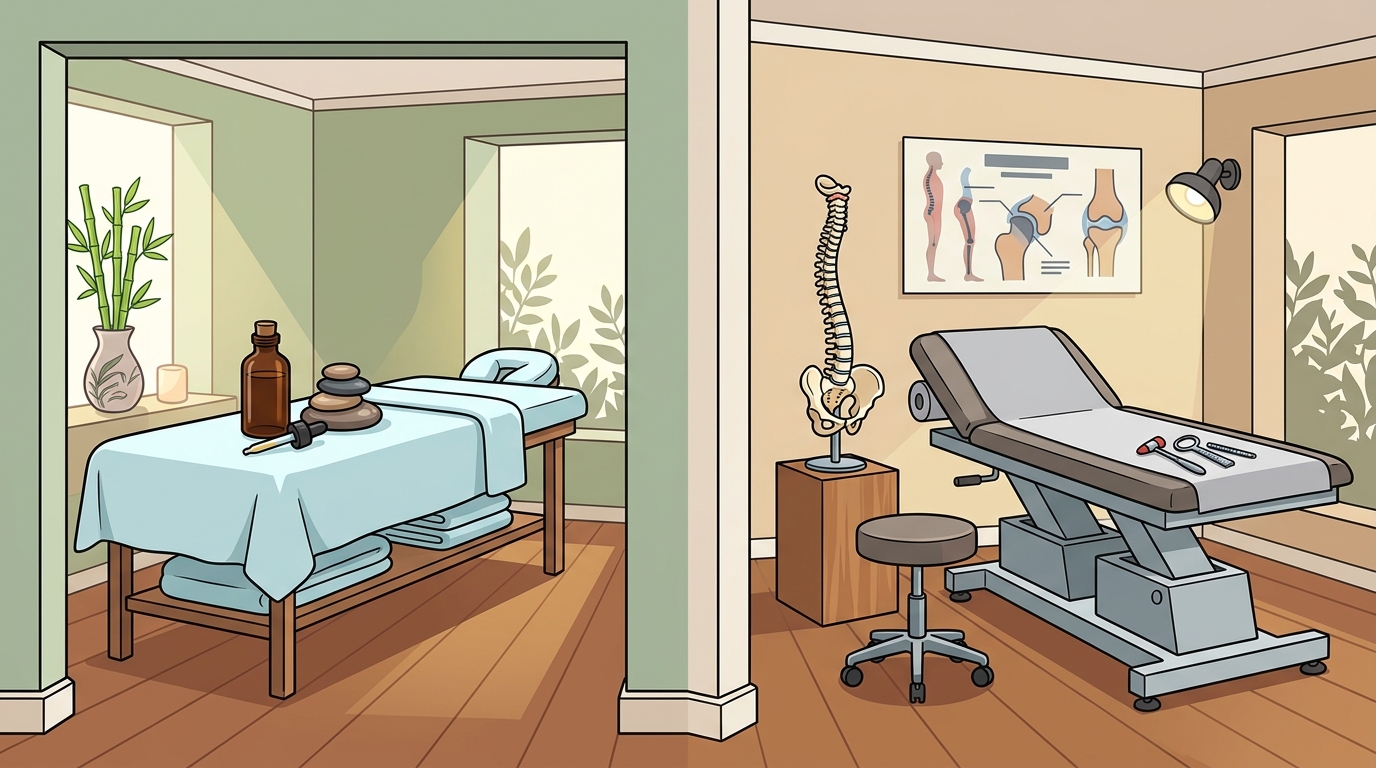
While both disciplines are hands-on, the toolkits differ considerably. The table below summarizes the primary techniques used in each modality.
| Feature | Massage Therapy | Osteopathy |
|---|---|---|
| Primary focus | Soft tissue (muscles, fascia) | Whole-body structure and function |
| Common techniques | Swedish massage, deep tissue, trigger point therapy, kneading, effleurage | Joint mobilization, cranial techniques, visceral manipulation, soft tissue release |
| Pressure style | Moderate to deep, varies by technique | Often gentler; precise and targeted |
| Lifestyle guidance | Occasional stretching advice | Postural correction, exercise prescription, dietary advice |
| Assessment depth | Brief intake focused on areas of concern | Comprehensive musculoskeletal, neurological evaluation |
| Treatment goal | Immediate relief, relaxation, improved circulation | Long-term functional balance and self-healing |
Our massage therapy team at Sequoia Massothérapie is trained in Swedish massage, Shiatsu, cupping therapy, and several other techniques. On the osteopathy side, treatments include joint mobilization and work on vascular, nervous, and lymphatic channels.
Cranial and Visceral Techniques
Cranial osteopathy is a specialized technique that involves subtle movements of the skull to enhance nervous system function. Visceral osteopathy targets internal organs to improve their function. These methods have no direct equivalent in standard massage therapy.
Conditions Each Therapy Treats Best
Massage therapy is a great option if you are dealing with stress, sore muscles, tension headaches, or general fatigue. It is also widely used for sports recovery and workplace-related tension. Explore our corporate massage service for on-site relief in Montreal offices.
Osteopathy excels with chronic or complex conditions such as sciatica, recurring joint pain, postural imbalances, digestive issues, and arthritis. Because it addresses root causes rather than symptoms alone, it often delivers longer-lasting results for structural problems.
When Immediate Relief Is the Priority
For acute muscle tightness after a workout or a stressful week, a 60-minute therapeutic massage can provide fast, tangible relief. Our pricing page lists session options from 30 to 90 minutes.
What to Expect During a Session
A massage therapy session typically begins with a brief discussion about your areas of concern. The therapist then works directly on the skin using oil or cream, with draping for comfort and privacy. Sessions at Sequoia range from 30 to 90 minutes depending on the technique chosen.
An osteopathy session starts with a thorough assessment of your medical history and a physical examination to identify structural imbalances. The practitioner then develops a customized treatment plan that may include joint mobilization, soft tissue release, and lifestyle recommendations. First sessions and follow-ups at Sequoia are priced at $105.
Combining Both Therapies for Optimal Results
Many patients benefit from integrating both approaches. Massage therapy can maintain muscle flexibility and manage day-to-day tension, while osteopathy addresses deeper structural and functional issues. According to the London College of Osteopathy, integrating massage and osteopathy in the treatment of back pain can increase success rates significantly.
At Sequoia Massothérapie, our team of experienced therapists can help you design a complementary care plan. We also offer acupuncture and naturopathy for a truly holistic wellness strategy.
How to Choose the Right Therapy for You
Your choice depends on your goals. If you want relaxation, stress relief, or targeted muscle work, massage therapy is ideal. If you are experiencing chronic pain, recurring injuries, or postural dysfunction, osteopathy provides a more comprehensive path to recovery.
Consider combining both if you have a complex condition that involves both muscular tension and structural imbalance. Consulting with a qualified practitioner is the best first step. Our Montreal-based team can guide you toward the right treatment after an initial evaluation.
Key Takeaways
- Massage therapy focuses on soft tissue manipulation for relaxation and immediate pain relief.
- Osteopathy is a whole-body approach that targets structural imbalances and promotes long-term healing.
- Osteopaths use joint mobilization, cranial, and visceral techniques not typically found in massage therapy.
- Massage therapy is best for stress, muscle tension, and sports recovery; osteopathy excels with chronic and complex conditions.
- Combining both therapies often produces the best outcomes, especially for back pain and recurring issues.
- Sequoia Massothérapie offers both massage therapy and osteopathy at its Plateau-Mont-Royal location in Montreal.
- Always consult a qualified practitioner to determine which therapy suits your specific needs.
Frequently Asked Questions
What is the main difference between massage therapy and osteopathy?
Massage therapy focuses on manipulating soft tissues like muscles and fascia to relieve tension and improve circulation. Osteopathy takes a whole-body approach, assessing and treating structural imbalances across the musculoskeletal, nervous, and visceral systems to restore overall function.
Is osteopathy more effective than massage therapy?
Neither is universally better. Osteopathy is typically more effective for chronic structural issues such as joint pain and postural problems, while massage therapy provides excellent results for muscle tension, stress relief, and relaxation.
Can I receive both treatments at the same time?
Yes. Many patients benefit from combining massage therapy for muscle maintenance with osteopathy for deeper structural correction. At Sequoia Massothérapie, our team can design a coordinated treatment plan for you.
Does osteopathy hurt?
Osteopathic techniques generally use gentle, precise pressure. Some patients experience mild soreness after a session as the body adjusts, but treatments are typically comfortable and non-invasive.
How long does each session last?
Massage therapy sessions at Sequoia range from 30 to 90 minutes. Osteopathy sessions typically last about 60 minutes, including the initial assessment.
Are massage therapy and osteopathy covered by insurance in Quebec?
Many private insurance plans in Quebec cover both massage therapy and osteopathy. Coverage varies by provider, so check with your insurer before booking. Receipts for insurance purposes are provided at Sequoia Massothérapie.
Who should consider osteopathy over massage therapy?
People with recurring pain, joint restrictions, postural imbalances, or chronic conditions like sciatica or arthritis may benefit more from osteopathy. It is also a strong choice for those who want a preventative, whole-body approach to wellness.
What massage techniques are offered at Sequoia Massothérapie?
Sequoia offers Swedish massage, Shiatsu, Tuina, cupping massage, Lomi-Atsu, fascia therapy, and more. Visit our services page for the full list.
Ready to Find the Right Therapy for You?
Whether you need deep relaxation, chronic pain relief, or a comprehensive wellness plan, Sequoia Massothérapie has you covered. Our experienced massage therapists and osteopathy practitioners on the Plateau-Mont-Royal are ready to help. Book your appointment today and take the first step toward better health.